No products in the cart.
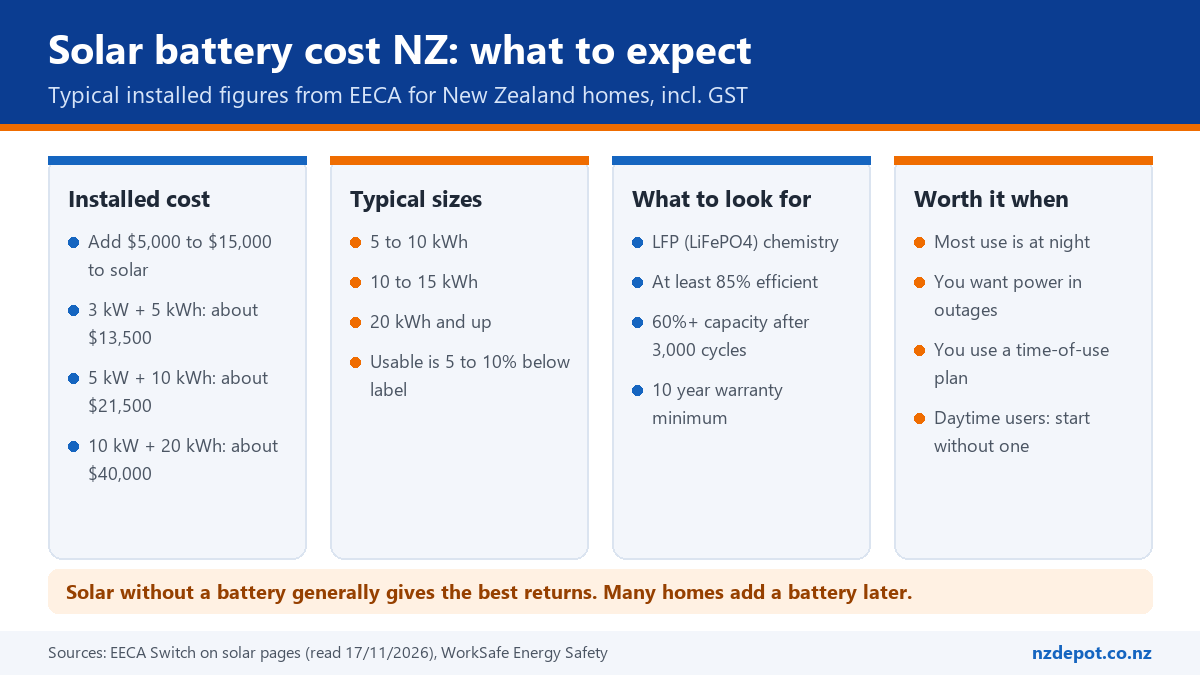
Solar battery cost NZ: EECA, the government energy agency, says to add $5,000 to $15,000 to a solar system for an installed home battery, depending on its type and size. Its typical packages run from $13,500 for 3 kW of panels with a 5 kWh battery to $40,000 for 10 kW with 20 kWh. Most homes do not need one on day one.
Quick answer
- Installed cost: EECA’s range is $5,000 to $15,000 on top of the solar system, incl. GST and standard installation.
- Typical sizes: 5 to 10 kWh, 10 to 15 kWh, or 20 kWh and up. A small solar system will not fill a big battery.
- When it pays: most of your power use is at night and cannot move to the day, or you want power in a power cut.
- When it does not: you already use most of your solar in daylight, or you want the fastest payback. A battery usually makes payback longer.
- What to buy: lithium iron phosphate (LFP or LiFePO4), at least 85% efficient, at least 60% capacity left after 3,000 cycles, and a 10 year warranty.
Solar battery cost NZ: installed prices from EECA
EECA publishes typical installed prices so you can check a quote against them. These include standard installation and GST.
| EECA package | Panels | Without battery | With battery | Battery size |
|---|---|---|---|---|
| Small, 3 kW | 7 | $8,500 | $13,500 | 5 kWh |
| Medium, 5 kW | 12 | $11,500 | $21,500 | 10 kWh |
| Large, 10 kW | 24 | $20,000 | $40,000 | 20 kWh |
Read across the rows and the battery works out at about $5,000 for 5 kWh, $10,000 for 10 kWh and $20,000 for 20 kWh in those packages, so roughly $1,000 per kWh fitted. That is an installed figure, so it covers labour and the parts that connect the battery to the house, not just the battery box. EECA adds that the cost varies with the battery’s type and capacity.
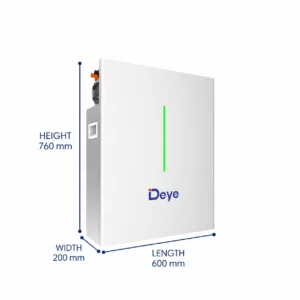
If you buy hardware supply only, the battery is a much smaller share. On 17/11/2026 our 48 V lithium iron phosphate batteries ranged from $1,549.99 for a 5 kWh unit to $3,419.99 for a 14.3 kWh IP65 unit, incl. GST. A Deye RW-F10.2 (10.2 kWh) was $5,709.99. Installation, an inverter that can run a battery, and certification are extra, and your electrician quotes those.
Solar battery prices by size
Battery size is the energy it stores, measured in kilowatt-hours (kWh). The quick sum is volts times amp-hours: a 51.2 V battery rated 206 Ah holds about 10.5 kWh. Check the usable figure as well. EECA notes lithium batteries cannot be fully emptied, so usable capacity is usually 5 to 10% lower than the label.
| Battery (our range) | Rated / usable | Our price 17/11/2026 | Per rated kWh |
|---|---|---|---|
| 12 V 110 Ah LiFePO4, IP65 | 1.4 kWh | $379.99 | about $270 |
| 25.6 V 210 Ah LiFePO4 (Gold) | 5.3 / 5.1 kWh | $1,849.99 | about $350 |
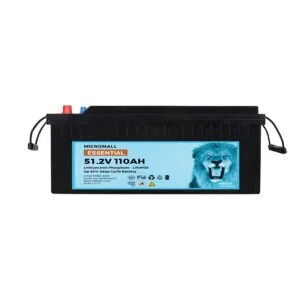
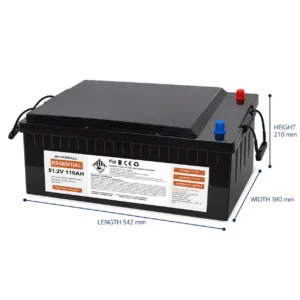
| 51.2 V 110 Ah LiFePO4, IP54 | 5 kWh | $1,549.99 | about $310 |
| 51.2 V 206 Ah LiFePO4, stackable | 10.5 / 9.6 kWh | $2,999.99 | about $285 |
| 51.2 V 280 Ah LiFePO4, IP65 | 14.3 / 12.96 kWh | $3,419.99 | about $240 |
| Deye RW-F10.2 LiFePO4 | 10.2 kWh | $5,709.99 | about $560 |
Prices are incl. GST, supply only. The price per kWh drops as batteries get bigger, but that only helps if you can fill the battery. EECA warns that a small solar system will not fully use a larger battery, and bigger batteries cost more and take more space.
Is a solar battery worth it?
EECA’s answer is that solar without a battery generally gives the best returns. Many homes install panels first and add a battery later, which keeps the first bill down and shows you what your bills do with solar alone.
A battery earns its place in these cases, all from EECA’s guidance:
- Night-time use you cannot move. EECA’s example rural Christchurch home of five, rarely home in the day, gets 24 panels and a 10 kWh battery because most of its use happens at night.
- Backup in outages. Solar without a battery gives no power in a power cut. For backup you need a battery with enough usable capacity and a backup-capable inverter. EECA says this is particularly useful rurally.
- Time-of-use pricing. With a battery, EECA recommends a time-of-use plan: charge cheaply, use stored power at the morning and evening peaks.
Skip it, for now, if someone is usually home in the day. EECA’s suburban Auckland example, a family of four using 8,000 kWh a year, gets 12 panels and no battery for $12,000 installed and saves about $1,500 a year. The Christchurch home with the battery costs $30,000 and EECA puts its savings at the same $1,500 a year. That is the battery trade-off in one line: resilience and night-time power, but a longer payback than EECA’s typical 7 to 10 years for solar alone. Our solar sizing guide covers the panel side.
How to choose a home battery
EECA lists four features to look for, and its approved product list only includes batteries that meet its efficiency and demand flexibility recommendations.
- Efficiency of at least 85%. You get about 85% of the energy back out compared with what went in.
- At least 60% of usable capacity left after 3,000 cycles. One cycle a day is about 8 years of use.
- Reporting. The battery shows its state of charge, usable capacity and mode.
- Control. You can set minimum and maximum charge and the operating mode.
On chemistry, EECA says most home batteries are lithium-ion, in two types: NMC and LFP (LiFePO4). LFP is slightly bulkier but has better thermal stability, so it is often favoured in homes. Lead-acid is bulkier, less efficient and shorter lived, and EECA says it is unlikely to be recommended today. A good battery warranty covers at least a 70% depth of discharge, for example 90% down to 20%. EECA expects a battery to last 10 years or more, and its minimum warranty for a lithium-ion battery is 10 years.
12 V, 24 V or 48 V?
Match the battery to the inverter. Caravans, boats and small cabins usually run 12 V or 24 V. Home storage and most hybrid and off-grid house kits run 48 V (51.2 V nominal for LiFePO4), which keeps currents and cable sizes down. WorkSafe says any system over 50 V AC or 120 V ripple-free DC, or with 230 V terminations, must be installed by a registered electrician. A home battery connects to a 230 V inverter, so plan on an electrician, which WorkSafe recommends for every PV system anyway.
AC coupled or DC coupled?
In an AC coupled system the panels and battery have separate inverters, which makes it easier to add a battery to solar you already have. In a DC coupled system one hybrid inverter runs both, which is more efficient and is usually chosen when solar and battery go in together. EECA notes that the inverter you pick can change what it costs to add a battery later, so mention it when you get solar quotes.
Where a battery can go, and who installs it
EECA says New Zealand rules cover the type of space (outdoors, or non-habitable rooms such as a garage or utility room), the distance from exits, windows, vents, gas equipment and vehicle impact, and fire-resistant protection. WorkSafe points to AS/NZS 5139 as best practice for batteries in grid-connected systems and AS/NZS 4509 for stand-alone (off-grid) systems, and it warns that some battery systems can give off flammable gases. Check the IP rating against the spot you have in mind: an IP20 battery belongs indoors in a garage, while IP65 units handle weather.
Going off-grid
EECA says a home fully off the grid needs a very large solar system with batteries, or a fossil-fuelled backup, to power it outside daylight hours and during outages. Smaller off-grid kits are common for baches, sheds and caravans. On 17/11/2026 our in-stock off-grid kits started at $2,549.99 (24 V, 3 kW), and a 5 kW hybrid inverter kit with 10 panels and a 10.7 kWh battery was $7,369.99, incl. GST.
Solar batteries at NZ DEPOT
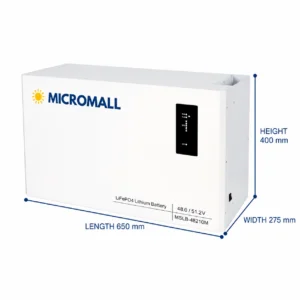
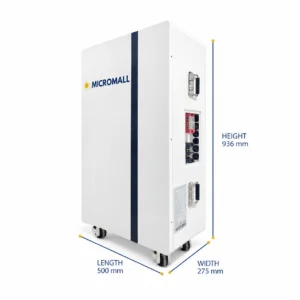
We sell batteries and kits supply only, for your registered electrician or solar installer to fit. Delivery is usually 3 to 9 working days. The grid below shows live prices and stock.



Browse all solar batteries or the off-grid and hybrid solar kits, or send us your inverter model and night-time kWh and we will suggest a battery that matches.
Solar battery cost FAQs
How much does a 10 kWh battery cost in NZ?
Installed with a 5 kW solar system, EECA’s package is $21,500, against $11,500 without the battery. Supply only, our 10.5 kWh LiFePO4 battery was $2,999.99 on 17/11/2026, before the inverter and installation.
How long does a solar battery last?
EECA says 10 years or more, depending on type, quality and how hard it is used. Look for at least 60% usable capacity after 3,000 cycles and a 10 year warranty.
Can I add a battery to my existing solar?
Yes, and EECA says many homes do. An AC coupled battery has its own inverter, which makes it easier to add to an existing system. Your installer will check what your current inverter supports.
Will a solar battery keep my power on in a power cut?
Only with a backup-capable inverter and enough usable capacity. Solar on its own does not supply power during an outage.
Which power plan should I use with a battery?
EECA recommends a time-of-use plan with a battery and a flat rate plan without one. If you change plans, the battery settings may need updating.
Is a lead-acid battery cheaper?
Per battery it can be. On 17/11/2026 our 12 V 120 Ah AGM gel battery was $309.99 against $379.99 for a 12 V 110 Ah LiFePO4. EECA notes lead-acid is bulkier, less efficient and shorter lived, so it is unlikely to be recommended for a home today.
Related guides and products
- Solar batteries (prices incl. GST)
- Off-grid and hybrid solar kits
- What size solar system do I need?
- Solar panels
Sources
- EECA, Solar costs and savings (read 17/11/2026)
- EECA, Learn about solar technology: batteries (read 17/11/2026)
- EECA, Plan your solar system (read 17/11/2026)
- EECA, Make the most of your solar system (read 17/11/2026)
- EECA, Solar quotes and installation (read 17/11/2026)
- WorkSafe Energy Safety, DIY solar installations (28/08/2024, read 17/11/2026)
- NZ DEPOT catalogue prices and manufacturer specifications on 17/11/2026 (the product grid above is live).