No products in the cart.
Home ventilation system cost in New Zealand depends mostly on the type you choose. At NZ DEPOT a do-it-yourself dry air unit is about $990 and a six room positive pressure kit is about $2,530 to $3,085 depending on the version, supply only (our prices on 08/11/2026, incl. GST). Consumer NZ put installed mechanical ventilation at upwards of $2,000, and the big brands such as DVS and HRV only give a price after a home visit.
Quick answer
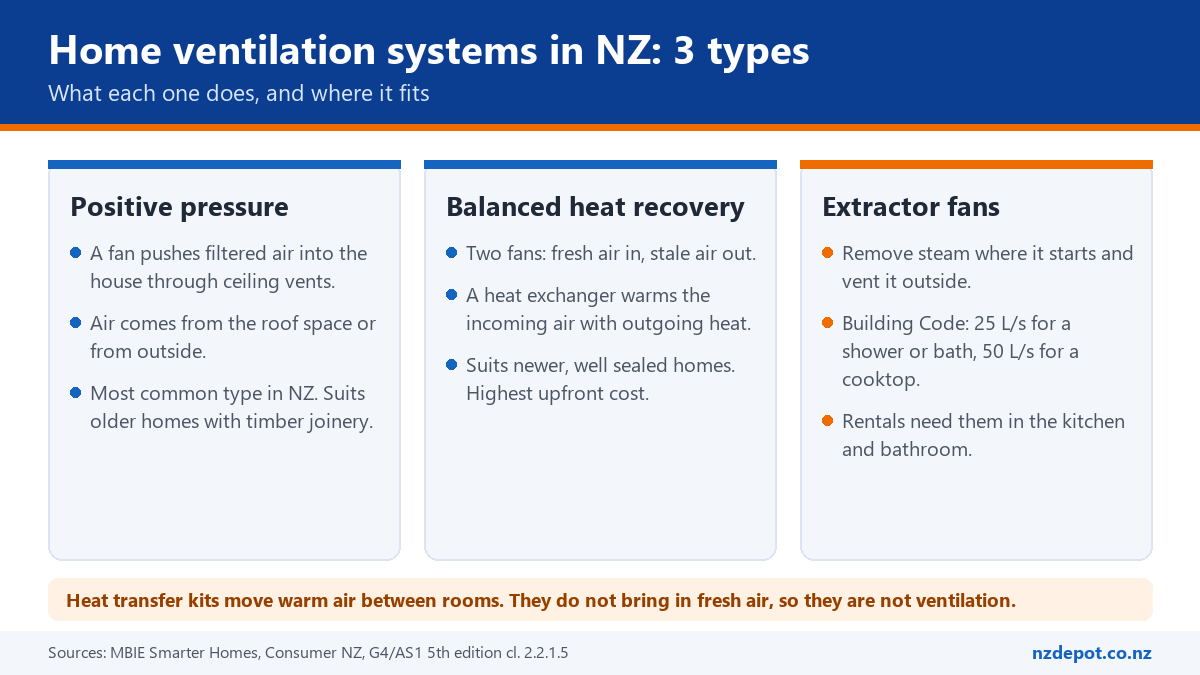
- Positive pressure (the most common type in NZ): our kits run from about $990 to $3,085, supply only.
- Balanced heat recovery: our units for homes up to 150 m² and 250 m² are $1,420 and $1,750, supply only. BRANZ says this type has the highest upfront cost once it is installed.
- Extractor fans deal with steam where it starts, and rentals must have them in the kitchen and bathroom.
- DVS and HRV do not publish system prices. DVS filter replacements are $75 or $125 on its own shop.
Home ventilation system cost by type
The table uses our own supply prices on 08/11/2026. Installation is extra, and the price of a fitted system from a brand that installs for you will be higher than a kit.
| Type | How it works | Our supply price (08/11/2026) | Good to know |
|---|---|---|---|
| Positive pressure | A fan in the ceiling space pushes filtered air into the rooms. Stale air leaves through gaps, windows and doors. | About $990 (all-in-one dry air unit) to $3,085 (6 room kit) | Roof space air is often colder than the house in winter. |
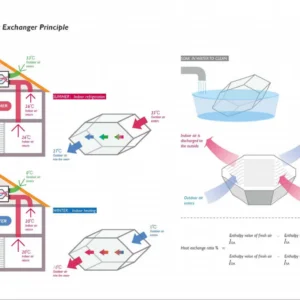
| Balanced heat recovery | Two fans and a heat exchanger: fresh air in, stale air out, with heat passed across. | $1,420 (up to 150 m²) and $1,750 (up to 250 m²) | Works best in a well sealed home. Needs ducting both ways. |
| Extractor fans | Pull steam out of a bathroom, kitchen or laundry and vent it outside. | See our ventilation fans | Size for 25 L/s at a shower or bath, 50 L/s at a cooktop. |
| Heat transfer kit | Moves warm air from a heated room to other rooms. | About $390 (1 room) to $1,740 (4 rooms) | Not ventilation. It brings in no fresh air. |
Looking for a heat pump? High wall sets from $802.99 incl. GST, delivered NZ wide. We arrange installation in Auckland, Hamilton, Tauranga, Rotorua, Wellington, Christchurch and Invercargill.
How much does a DVS system cost?
DVS does not publish system prices. Its website offers a free consultation and prices each home after that, and HRV works the same way, quoting after an in-home assessment. What DVS does list is filters: on 08/11/2026 its shop showed an EcoStatic filter at $75 and a carbon filter at $125. The BRANZ appraisal of the DVS system says the filter socks should be replaced every year, so budget for that as a running cost.
If you want to compare before anyone visits, a fair yardstick is a supply-only kit plus an installer’s quote. Consumer NZ’s buying guide put mechanical ventilation at upwards of $2,000 installed, and that figure is from 2018, so expect more today.
Positive pressure or heat recovery?
MBIE’s Smarter Homes guide lists three types in common use here: positive pressure, negative pressure (continuous extract) and balanced pressure, which is the heat recovery kind. Positive pressure is the most common.
- Older homes with timber joinery tend to suit positive pressure, according to Consumer NZ. These houses leak air already, so pushing filtered air in and letting stale air out through the gaps works with the building rather than against it.
- Newer, well sealed homes suit a balanced system. EECA calls heat recovery the best option if you can afford it.
- Check what the air source is. In winter the roof space is usually colder than the inside of the house, so a roof-fed system can mean more heating. Some systems can be ducted to take outside air instead.
- Check the roof. MBIE says these systems should never be installed under asbestos roofing.
A system is only true heat recovery if it has an air-to-air heat exchanger. Two fans on their own are not enough.
What a ventilation system will not do
Ventilation is not heating. DVS says so in its own FAQ, and adds that the air can feel cooler in the colder months. MBIE also warns that in-line duct heaters are an inefficient and expensive way to warm the air. If the house is cold, sort the heating first, and our heat pump size guide is a good place to start. Note that a heat pump heats but does not ventilate, so the two do different jobs.
BRANZ and MBIE both say to find and fix the sources of damp, and to sort insulation, draughts and heating, before you add a ventilation system. Extractor fans in the bathroom and kitchen deal with steam where it starts. A whole house system then has less moisture to move.
Rentals: the Healthy Homes ventilation rules
For rental homes, Tenancy Services sets out what the ventilation standard needs:
- Every living room, dining room, kitchen and bedroom needs at least one window, door or skylight that opens and can be fixed open, adding up to at least 5% of the floor area.
- Kitchens need an extractor fan venting outside, 150 mm in diameter including the ducting, or 50 L/s.
- Bathrooms with a shower or bath need one too, 120 mm or 25 L/s.
- Recirculating systems, which Tenancy Services names as products like HRV and DVS, are not suitable for meeting the kitchen and bathroom rule.
So in a rental, a whole house system is something extra, not a replacement for the fans.
Running costs and upkeep
None of EECA, BRANZ, MBIE or Consumer NZ publish a standard wattage for these systems, so look at the fan’s rating on the product you are considering. Some useful markers:
- Consumer NZ found a dehumidifier, at up to $2.50 a day, costs more to run than a ventilation system.
- BRANZ modelled a 90 m² Wellington house in July and found a heat recovery system at 90% efficiency cut the heating cost to a quarter or less of the same house without heat recovery.
- Filters: replace them as the maker says. BRANZ also suggests cleaning outside hoods about every 12 months and checking ducts every 2 years. Very fine filters cut airflow, so do not swap in a finer grade than the system was designed for.
Home ventilation kits at NZ DEPOT
Our kits are sold supply only, so you can fit them yourself or use your own installer. Any electrical work beyond plugging in must be done by a licensed electrician. The 4 room HomeVent kit, for example, comes with a 200 mm EC inline fan, a digital speed controller, an EU7 filter box and a washable filter sock. Prices below are live.
-
Price range: $2,071.71 through $2,526.48
HomeVent 2 room Ventilation Kit (150mm EC fan) - HomeVent (Positive Pressure) - SV2-EC
Price range: $2,071.71 through $2,526.48 -
Price range: $2,160.68 through $2,634.98
HomeVent 4 room Ventilation Kit (200mmEC fan) - HomeVent (Positive Pressure) - SV4-EC
Price range: $2,160.68 through $2,634.98 -
Price range: $2,529.27 through $3,084.48
HomeVent 6 room Ventilation Kit (200mm EC fan) - HomeVent (Positive Pressure) - SV6-EC
Price range: $2,529.27 through $3,084.48
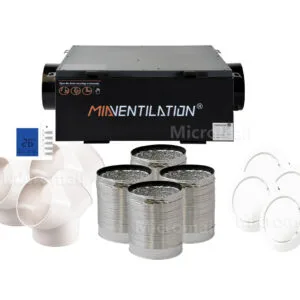
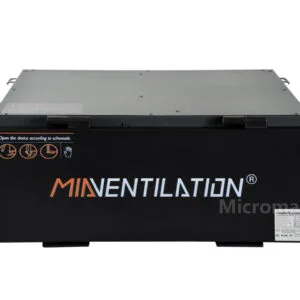
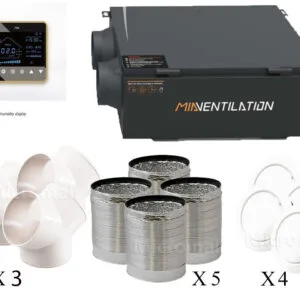
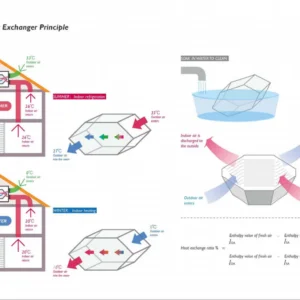
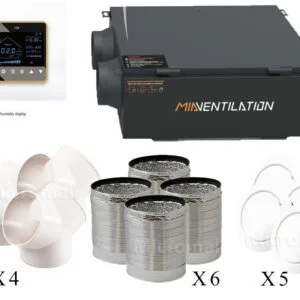

See the full home ventilation range, or send us your floor plan and number of rooms and we will suggest a kit.
Home ventilation system cost FAQs
Is a home ventilation system worth it?
In a home that gets condensation even after the basics are sorted, it can help. EECA says positive pressure systems can reduce condensation, especially in older homes. If the damp comes from a missing extractor fan or clothes drying indoors, fix that first, because it costs less.
Can I install a ventilation kit myself?
Some kits are sold for DIY fitting in the ceiling space, so read the installation instructions before you buy. Wiring that is not a plug-in connection must be done by a licensed electrician, and never install a roof-fed system under asbestos roofing.
Does a DVS or HRV system meet the Healthy Homes standard?
Not for the kitchen and bathroom part. Tenancy Services says recirculating systems such as HRV and DVS are not suitable for that requirement, so the extractor fans are still needed.
Does a ventilation system heat the house?
No. It moves air, and in winter roof space air is often colder than the air inside. Heat recovery reduces the heat you lose with the outgoing air, which is different from heating.
How often do the filters need changing?
Follow the maker. For DVS the BRANZ appraisal says the filter socks are replaced every year. Budget for filters when you compare systems.
Related guides and products
- Home ventilation kits and heat recovery units
- Extractor and ventilation fans
- What size heat pump do I need?
- Heat pump running cost in NZ
Sources
- MBIE Smarter Homes, Ventilation and heat recovery systems (updated 09/08/2023)
- MBIE Smarter Homes, Active ventilation (updated 09/08/2023)
- EECA, Reduce dampness
- Consumer NZ, Ventilation systems buying guide (2018)
- BRANZ Bulletin 698, Mechanical ventilation (March 2025)
- BRANZ Appraisal 375, DVS (2019, amended 12/05/2023)
- Tenancy Services, Healthy Homes ventilation standard (updated 30/10/2026)
- MBIE, Acceptable Solution G4/AS1 Ventilation, Fifth Edition, clause 2.2.1.5
- DVS website, shop and FAQ, and HRV FAQ, read 08/11/2026.
- NZ DEPOT catalogue prices on 08/11/2026 (the product grid above is live).
Ready to choose a heat pump? High wall sets from $802.99 incl. GST, delivered NZ wide. We arrange installation in Auckland, Hamilton, Tauranga, Rotorua, Wellington, Christchurch and Invercargill.